Thought leadership
How can hotels stand out in AI search?

Getting your hotel noticed has never been easy, and AI just added a whole new twist. More travelers are turning to AI for every part of their trip, and that habit is only going to continue to grow. Right now, 83% of U.S. leisure travelers say a recommendation from an AI tool they trust makes them more likely to book that hotel (TakeUp, via LODGING).
In other words, travelers are handing a lot of their decisions to these robot concierges. Ranking on page one isn't enough anymore. You need to be the hotel the AI names, and the one it names consistently. The good news? This is a real opening for independent hotels that have been outspent and boxed out in the old search game. In an AI answer, a well-described boutique property can sit right next to the big brands.
Now the honest part. The models behind AEO and GEO (answer engine and generative engine optimization) are proprietary and change constantly. Nobody has a perfect map of what they pull from or why one hotel beats another. But we're not flying blind, and there's plenty you can do today to set yourself up for success in this evolving landscape.
How AI decides which hotel to name
AI doesn't rank your website the way Google does. It builds an answer from everything it can read about you, and it recommends the hotels it feels most confident describing. Here are four things that can build that confidence:
- Clear, consistent facts. Rooms, amenities, fees, policies and location should match everywhere: your website, Google and the OTAs. If your site says free parking and an OTA says $30 a night, the AI may just skip you.
- Other people talking about you. It's a bit of a popularity contest. The more credible mentions and guest content out there, the more material the AI has to work with, and the better your odds of showing up.
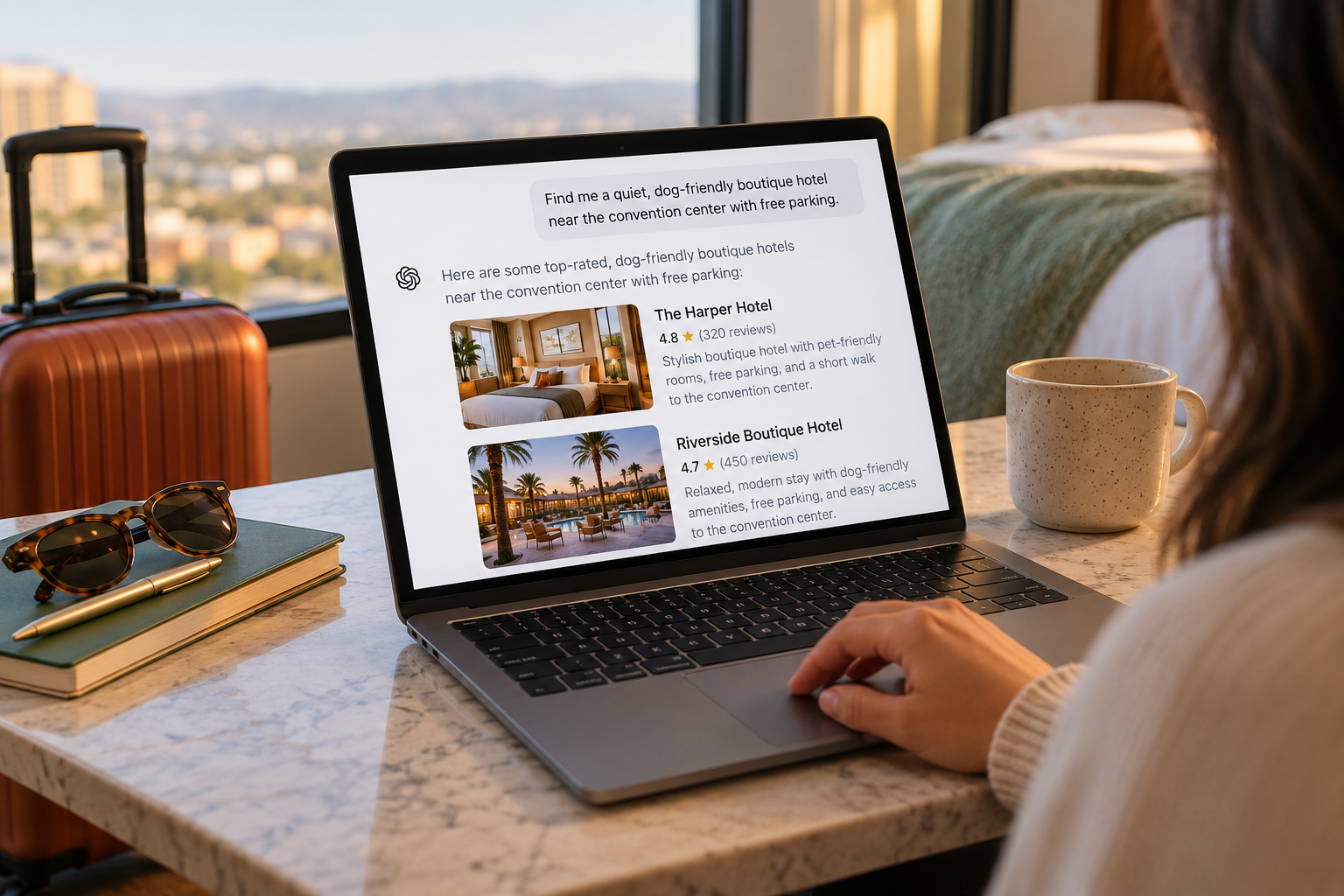
- Specific answers. This one's actually fun. You no longer have to guess which keywords people type. They ask AI the way they'd ask a friend: "Help me find a quiet, dog-friendly boutique hotel near the convention center with free parking." The hotels whose websites answer each part of that plainly are the ones that get matched. So aim to be the go-to source on your neighborhood, your nearby venues and your niche.
- A reason to choose you. AI explains its picks. Give it something concrete to repeat: a better price, a perk or a feature nobody else has.
Five things to do right now:
- Ask the models about yourself. Once a month, put on your guest hat and ask ChatGPT, Claude and Gemini things like "best hotel in [city] for [trip type]." Do you show up? (and if not, who does?) Is what it says about you accurate? And which sources does it site? Those sources are where you need to be. Do the same for your comp set to spot what to fix and what to lean into.
- Fix your facts everywhere. Audit your website, Google Business Profile and top OTA listings for mismatched info. Then add clear, structured detail to your site (schema markup) so AI can read your rooms, rates and policies without guessing. Your web team or booking engine provider can usually handle this quickly.
- Write for questions, not keywords. Add a plain-language FAQ and short pages that answer real guest questions: parking cost, pet fees, the walk to the venue, early check-in. One clear sentence beats a paragraph of adjectives.
- Get talked about off your own website. Keep encouraging reviews and respond to them. Pitch local guides and travel writers. Join the networks where verified guests mention and recommend you. Every credible third-party mention is AI citation gold, so treat it that way.
- Give AI a reason to send guests direct. If your OTA listing and your website show the same price, the AI has no reason to point guests your way. A tangible direct-booking benefit, like cashback, a perk or a member rate, gives it something to repeat. It typically keeps you within rate parity too, though it's worth a quick check against your OTA contracts.
Don't let AI become the next OTA
There's a good chance AI agents try to do what the OTAs did: sit between you and your guest and take a cut. The hotels that come out ahead will have two things an algorithm can't replace.
A better deal for booking direct, stated plainly. When an AI compares "$249 plus 5% cashback for booking direct" against "$249" on an OTA, you win. But only if the offer is visible and specific enough for the AI to repeat.
Demand that doesn't depend on the algorithm. Guests who already know you, and have been rewarded for booking direct, come back no matter what the model says this month. That's why loyalty programs exist. For independents, though, building one big enough to matter has always been the hard part.
That's where a program like The Guestbook comes in. It gives independent hotels a network to join and a cashback reward travelers already recognize. You get a loyalty benefit the AI can cite, third-party mentions from verified guests, and repeat demand that doesn't hinge on the next algorithm update.
The bottom line
AI is becoming the new front desk for trip planning. The hotels it recommends will be the ones that made themselves easy to recommend. Start with an hour of asking the robots about yourself, fix what you find, and go from there.